



COPD Connect
  • Saved
Comparison of High-Flow Nasal Cannula with Conventional Oxygen Therapy in Patients with Hypercapnic Chronic Obstructive Pulmonary Disease: A Systematic Review and Meta-Analysis

Comparison of High-Flow Nasal Cannula with Conventional Oxygen Therapy in Patients with Hypercapnic Chronic Obstructive Pulmonary Disease: A Systematic Review and Meta-Analysis

Source : https://www.dovepress.com/comparison-of-high-flow-nasal-cannula-with-conventional-oxygen-therapy-peer-reviewed-fulltext-article-COPD

Chronic obstructive pulmonary disease (COPD) is a worldwide cause of morbidity and mortality with a growing burden. The progression of COPD leads to hypercapnic respiratory failure, which is thought to...

Conclusion: Compared with COT, short-term HFNC reduced PaCO2 and the need for escalating respiratory support in acute hypercapnic COPD, whereas long-term HFNC reduced COPD exacerbations rates in chronic hypercapnia. HFNC has great potential for treating hypercapnic COPD.

  • Saved
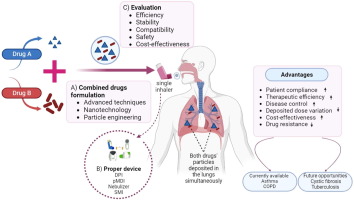
Drug combinations for inhalation: Current products and future development addressing disease control and patient compliance

Drug combinations for inhalation: Current products and future development addressing disease control and patient compliance

Source : https://www.sciencedirect.com/science/article/abs/pii/S0378517323004908?via=ihub

Available online 23 May 2023, 123070 Author links open overlay panel Heba Banat , Rita Ambrus , Ildikó Csóka Show more Pulmonary delivery is an alternative route of administration with...

Conclusions/Relevance: Various pharmaceutical technologies in terms of formulation and device in correlation with inhaled combinations were discussed in this review. Hence, inhaled combination therapy is driven by the need to maintain and improve the quality of life for patients with chronic respiratory diseases; promoting drug combinations...

  • Saved
GOLD COPD DOCUMENT 2023: a brief update for practicing cardiologists - Clinical Research in Cardiology

GOLD COPD DOCUMENT 2023: a brief update for practicing cardiologists - Clinical Research in Cardiology

Source : https://link.springer.com/article/10.1007/s00392-023-02217-0

Many patients seen by cardiologists suffer chronic obstructive pulmonary disease (COPD) in addition to their primary cardiovascular problem. Yet, quite often COPD has not been diagnosed and, consequently, patients have...

Conclusions: COPD is the elephant in the room for many patients with CVDs. It is a prevalent, preventable, and treatable condition, but most often it has not been diagnosed and, hence, not treated appropriately. Importantly for cardiology practice, optimal management of COPD is associated with improved cardiovascular outcomes [66]. Yet, such...

  • Saved

made a Post

The importance of treating COPD early

Early COPD can refer to the destruction/loss of the terminal/transitional bronchioles that arises before a deterioration in lung function is demonstrated. It can manifest in the absence of emphysematous destruction, with surviving airways exhibiting narrowed lumens/thickened walls. Defining “early COPD” can be challenging, with the 2023 Global Initiative for Obstructive Lung Disease (GOLD) guidelines preferring a “biologic” to “clinical” definition.

According to the 2023 Global GOLD guidelines, all COPD patients can be started on a long-acting muscarinic antagonist (LAMA), with treatment increases as needed. Treatments should be tailored based on patient needs. Furthermore, the report recommends LAMA plus long-acting beta-agonist (LABA) as initial treatment option in Group B and Group E COPD patients, with single inhalers being a more convenient/effective option than multiple inhalers.

Data suggest that the LAMA, tiotropium bromide, enhances lung function, slows annual declines in FEV, and decreases the need for rescue inhalers. Moreover, findings from short- and long-term randomized, controlled clinical trials involving tiotropium use in COPD patients have suggested that it is safe and improves health-related quality of life and exercise endurance when compared with placebo or active comparators. It also reduces dyspnea and lung hyperinflation.

Tiotropium bromide inhalation spray is the only LAMA that delivers a soft mist designed to be gentler on damaged lungs because use of the soft mist inhaler (SMI) requires minimal inspiratory effort vs. other inhaler types.

What is your protocol for initiating early treatment in COPD patients? What have your experiences been with tiotropium bromide soft mist inhalation spray?

  • 3yr
    Usually follow latest or LABA for Group A,preferably Spiriva Respimat. Dual therapy for Group B.Triple therapy for Group E. SABA for rescue therapy. Daliresp,Zithromax,and O2 for severer stages.Include Show More
  • 3yr
    Try to help patient quit smoking if still smoking. Most patient need quick acting inhaler like albuterol. Daily maintenance therapy with LAMA can be very helpful. Tiopropium Show More

Show More Comments

  • Saved
Preoperative umeclidinium/vilanterol or tiotropium improves postoperative FEV 1 in lung cancer patients with comorbid untreated chronic obstructive pulmonary disease

Preoperative umeclidinium/vilanterol or tiotropium improves postoperative FEV 1 in lung cancer patients with comorbid untreated chronic obstructive pulmonary disease

Source : https://jtd.amegroups.com/article/view/73457/html

Key findings * Patients with lung cancer with untreated COPD were actively treated for COPD. In the COPD intervention group, the measured FEV1 value 3 months postoperatively was similar to...

Conclusions: In lung cancer patients with untreated COPD, active preoperative intervention improved respiratory function, expanded treatment options, and maintained respiratory function to a degree that exceeded preoperative predictions.